


 Language
 English
 русский
 Español
 Português
 Deutsch
 عربى
عربى italiano
 Türk
Türk हिंदी
हिंदी Indonesia
 Tiếng Việt
If you need any help, please feel free to contact us

Aluminum Cable Tray Design Standards Explained: Load, Span & Compliance
Content
Get the governing standard right, and an aluminum cable tray specification almost writes itself. Engineers who miss this step run into field conflicts: supports spaced too far apart, fittings that force cables past their bend radius, and trays that fail a corrosion inspection on a coastal site. The standard fixes the alloy, the load class, the deflection limit, and the maximum span — four parameters that determine every downstream decision. This article explains how the main aluminum tray standards work and how to apply them in a real specification.
The Standards That Define Aluminum Cable Tray Design
Aluminum cable tray design is governed by a small group of internationally recognized standards. In North America, NEMA VE 1 and CSA C22.2 No. 126 set the requirements for construction, load classes, and deflection limits. For most international projects, IEC 61537 covers the performance and testing of cable tray and cable ladder systems as complete assemblies, including fittings. Projects in the United States typically reference NEMA VE 1 alongside NEC Article 392 for installation rules; projects in Europe, the Middle East, and Southeast Asia usually run on IEC 61537.
The raw material carries its own specifications. Sheet and plate components are normally produced to ASTM B209, while extruded side rails and rungs conform to ASTM B221. European projects commonly list EN 573 and EN 755 equivalents. When a manufacturer states that a product complies with a standard, the question worth asking is whether that compliance covers the complete assembled tray system or only the raw aluminum stock. That distinction changes procurement decisions.
Core Design Parameters in Aluminum Cable Tray Standards
Material Grade and Temper
Two alloys dominate aluminum cable tray fabrication. 6061-T6 has a minimum yield strength of roughly 276 MPa (40,000 psi), which makes it the standard choice for ladder-type trays, long spans, and heavy power loads. 6063-T5, with a yield strength around 145 MPa (21,000 psi), is preferred for formed trough sections and profiles that must bend without cracking. Both alloys form a self-healing oxide layer that provides excellent corrosion resistance in industrial and coastal atmospheres. The selection between them is an engineering trade-off between strength and formability, not a ranking of quality.
For installations in humid or salt-laden environments, engineers sometimes assume a marine-specific sheet alloy is required. In practice, extruded 6061-T6 and 6063-T5 frames handle most marine installations, and they are less prone to stress-corrosion issues than some high-magnesium sheet alloys at elevated service temperatures. The practical rule is simple: confirm the alloy and temper in the material certificate before approving a shop drawing, and do not accept a generic “aluminum” designation.
Load Class and Span
NEMA VE 1 organizes cable tray capacity into load classes that appear in almost every North American specification. The classes are defined by a uniform load over the full span combined with a concentrated load at the midpoint. For routine selection, engineers work with the uniform load values shown below.
| Load class | Uniform load rating | Typical application |
|---|---|---|
| Class A | 150 lb/ft (2.2 kN/m) | Power distribution and heavy industrial process plants |
| Class B | 100 lb/ft (1.5 kN/m) | Mixed power and control cabling in commercial and industrial buildings |
| Class C | 75 lb/ft (1.1 kN/m) | General-purpose installations with moderate cable density |
| Class D | 50 lb/ft (0.75 kN/m) | Communication and low-voltage cables only |
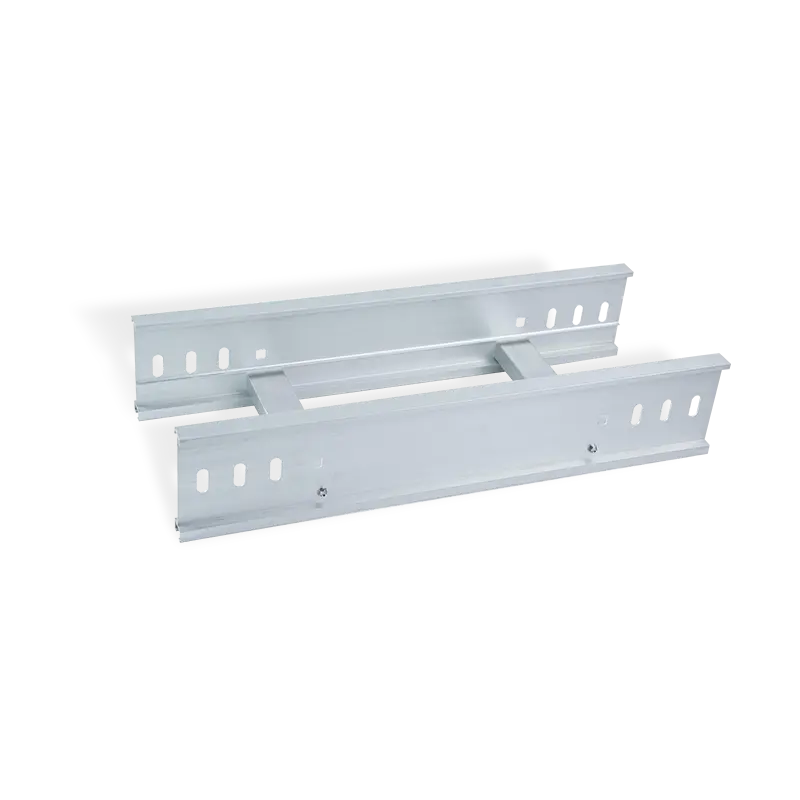
The load class only describes the applied load. The deflection limit — span/100 under working load in NEMA VE 1, with IEC 61537 using test-based verification — is what converts that load into a structural calculation. A Class A tray on 2.5-meter support centers needs a different section modulus than the same tray on 1.5-meter centers. Because aluminum has roughly one-third the modulus of elasticity of steel, support spacing has a disproportionately large effect on deflection. Long unsupported runs call for ladder-type construction with deep side rails; short spans with dense cabling are more economical as formed trough sections. For spans beyond 3 meters, aluminum cable ladder trays are the standard solution because the open rung structure adds stiffness with minimal additional weight.
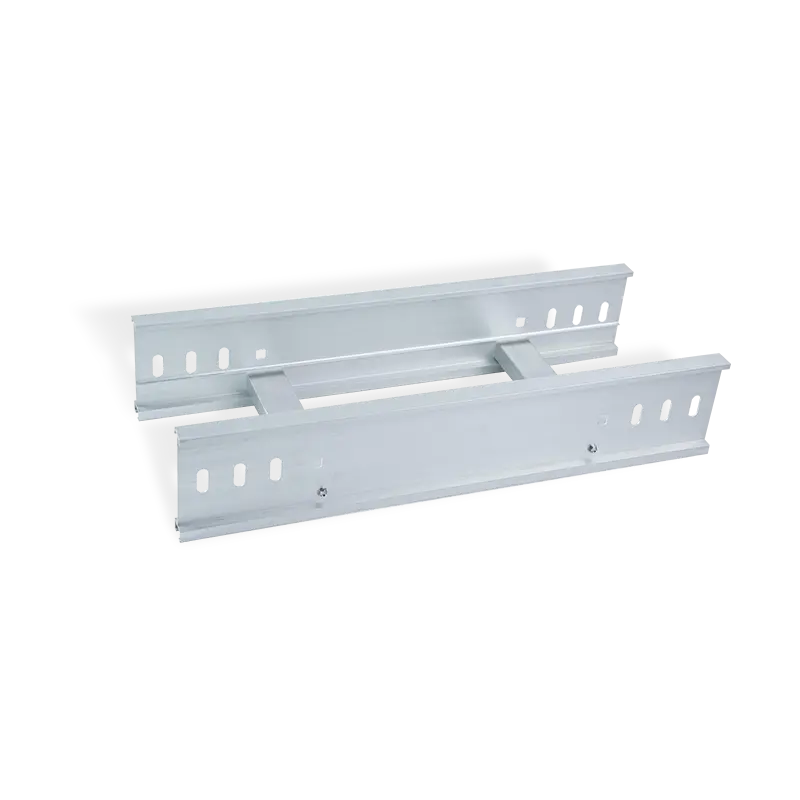 Custom Aluminum cable ladder Suppliers, FactoryJiangsu Youming Group Co., Ltd. is China Custom OEM/ODM Aluminum cable ladder Suppliers and Factory,Aluminum profile ladder cable tray, c...View Product →
Thermal Expansion and Fitting Selection
The coefficient of thermal expansion of aluminum is roughly 23 ppm per °C, about twice that of steel. A 30-meter straight run of aluminum tray subjected to a 50°C temperature swing expands approximately 35 mm. If that movement is not absorbed, it pushes against supports, distorts anchor points, and drags cables out of alignment. Standard design practice is to install expansion couplings on long straight runs at 20- to 30-meter intervals and to re-check the layout wherever the tray changes direction.
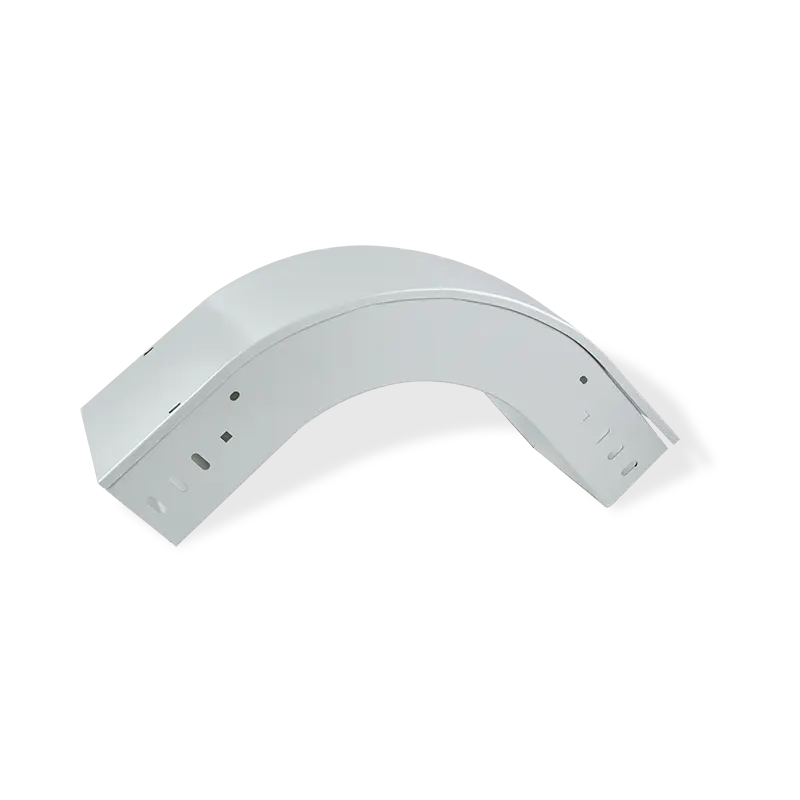
Fitting selection is also tied to the standard. Aluminum cable tray fittings such as elbows, tees, and reducers must maintain the minimum bend radius of the cables being installed — commonly 7.5 to 12 times cable diameter, depending on construction — and must carry the same load class as the straight sections. The standard sets test loads and deflection for fittings, but the specifier still has to calculate bend radius, cable fill, and clearance to adjacent systems.
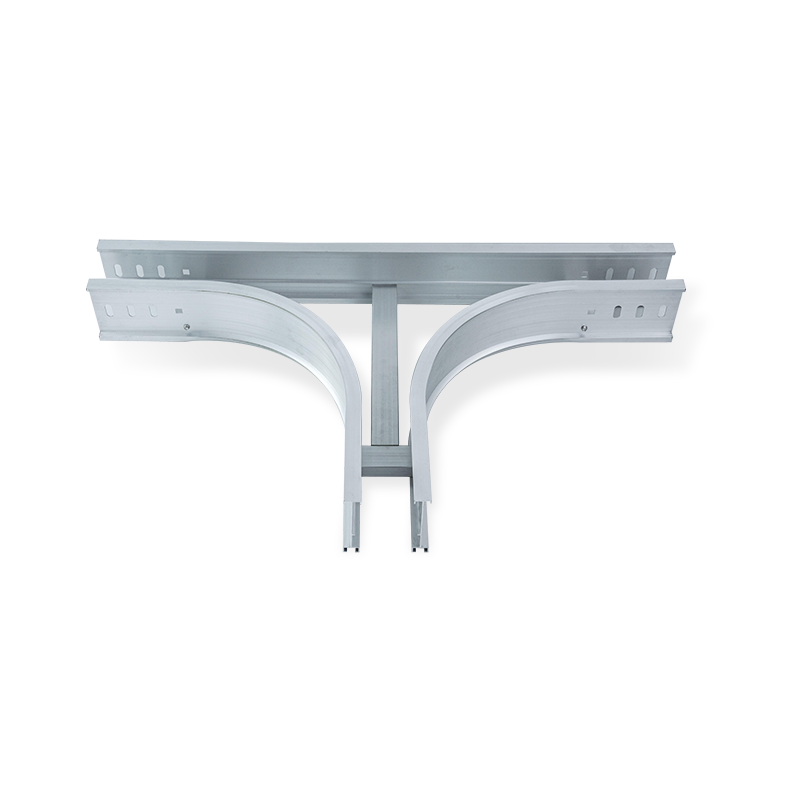 Custom Aluminum alloy cable trunking elbow tee accessories Suppliers, FactoryJiangsu Youming Group Co., Ltd. is China Custom OEM/ODM Aluminum alloy cable trunking elbow tee accessories Suppliers and Factory,Aluminu...View Product →
Corrosion Protection and Material Compatibility
Aluminum trays are often specified for marine, chemical, and wastewater environments because aluminum does not rely on a sacrificial coating to remain serviceable. A correctly alloyed tray keeps its oxide layer indefinitely, and minor scratches self-heal. Corrosion remains a design issue, but the critical mechanism is galvanic corrosion. Aluminum connected directly to copper, brass, or uncoated steel in the presence of moisture will corrode preferentially. Standard practice requires stainless steel fasteners, separation from dissimilar metals, and careful detailing of conduit and grounding connections. In severe chemical atmospheres, a plastisol or epoxy coating can be applied, but that converts a low-maintenance product into a coated product that must be inspected for coating damage.
The connection between design and operation shows up during routine inspection. Aluminum cable tray maintenance tips consistently focus on washing away salt deposits and checking fasteners for galvanic corrosion — both direct consequences of specification decisions made years earlier. Getting the alloy and compatible hardware right at the design stage cuts that inspection workload for the entire service life.
Translating Standards into a Procurement Specification
The practical value of a design standard is that it gives you a checklist. Confirm the governing standard — NEMA VE 1 or IEC 61537 — and assign a load class to each process area. Fix the support spacing that the installation will actually use, then check the manufacturer’s published load-and-span tables for that exact product series. Verify the alloy and temper from the mill certificate, and state the corrosion environment and any coating requirement in the specification.
One recurring error is specifying an aluminum tray by NEMA load class while allowing field support spacings wider than the manufacturer’s table. The standard allows each manufacturer to publish its own load tables, but the installed support spacing must match the span used in those tables. A tray rated for 2.2 kN/m on a 3-meter span may be perfectly valid, yet the same tray on 3.6-meter supports no longer complies. That is why the aluminum alloy cable tray installation guide should be reviewed during design rather than discovered during commissioning.
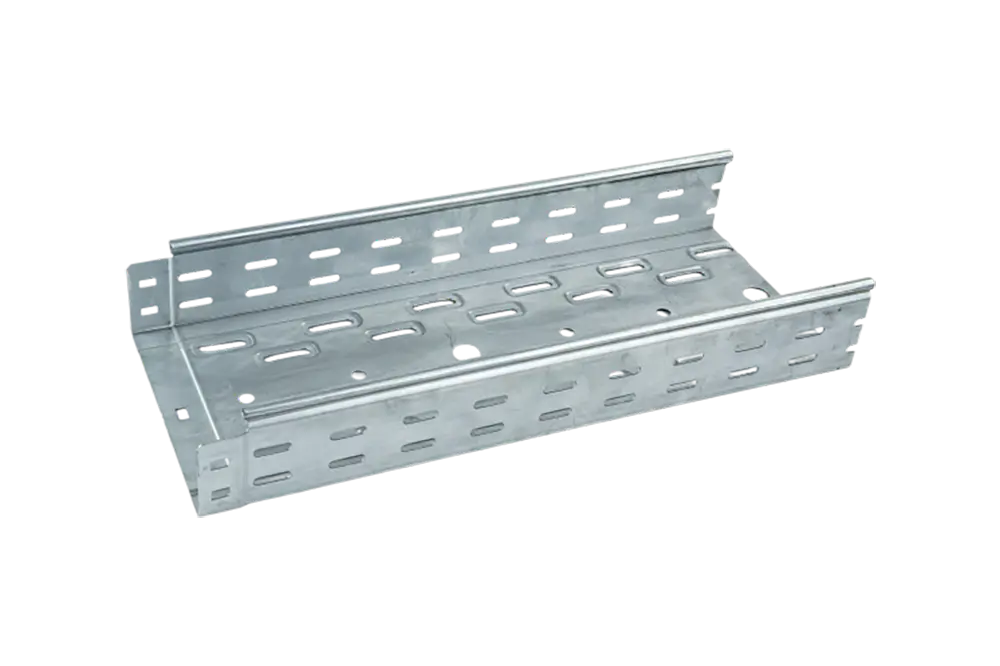
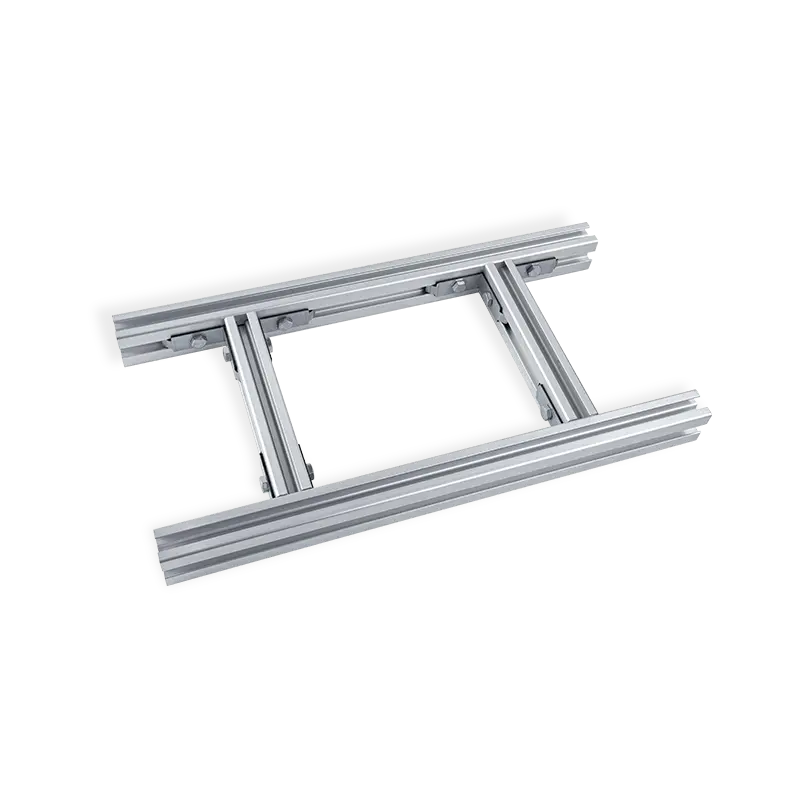
For engineers still shortlisting products, the guide on choosing the right aluminum alloy cable tray covers load, environment, and span decisions in more depth. From a procurement perspective, aluminum alloy cable tray systems supplied as a complete range — straight sections, fittings, and accessories from one source — simplify documentation. One material certificate, one set of test reports, and one set of load tables cover the entire system.
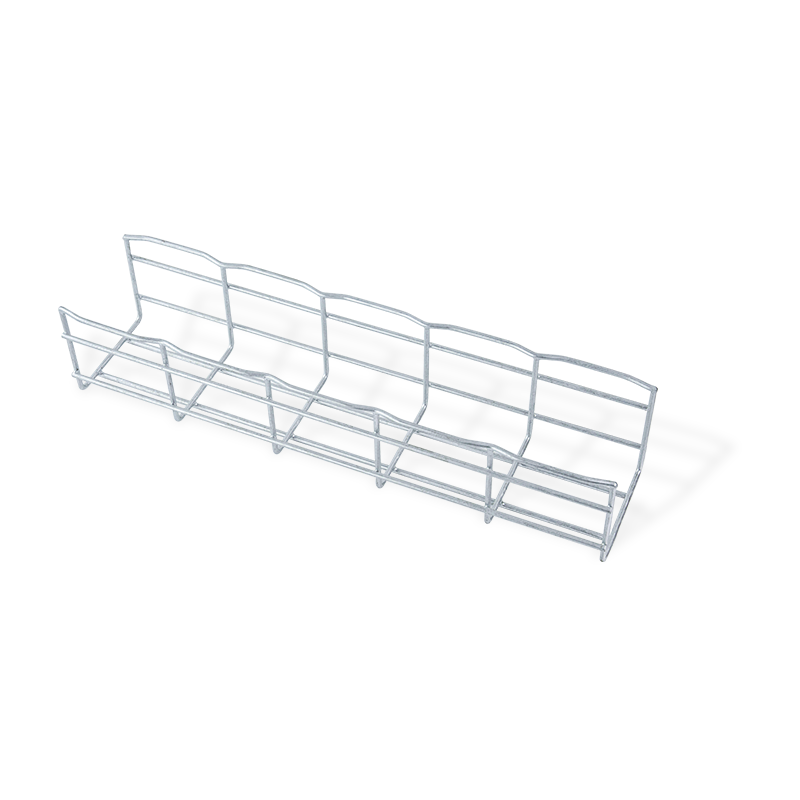 Custom Industrial Aluminum Alloy Cable Tray System ManufacturersJiangsu Youming Group Co., Ltd. is China Custom Industrial Aluminum Alloy Cable Tray System Manufacturers, Company, We Offer OEM/ODM Indu...View Product →
The Bottom Line for Designers and Buyers
Aluminum cable tray design standards are not a hurdle; they are a shortcut. NEMA VE 1 and IEC 61537 supply the load classes, deflection limits, and test methods that predict performance before installation begins. The alloy, support spacing, thermal expansion, and corrosion protection are all decisions the standards frame clearly. Specify the governing standard, confirm the load class, match the support spacing to the manufacturer’s table, and verify the material certificate. The remaining risk sits with supplier discipline. A manufacturer that tests its systems, publishes real load data, and supports the product with documentation is worth more than a specification that merely looks complete.
Related Products
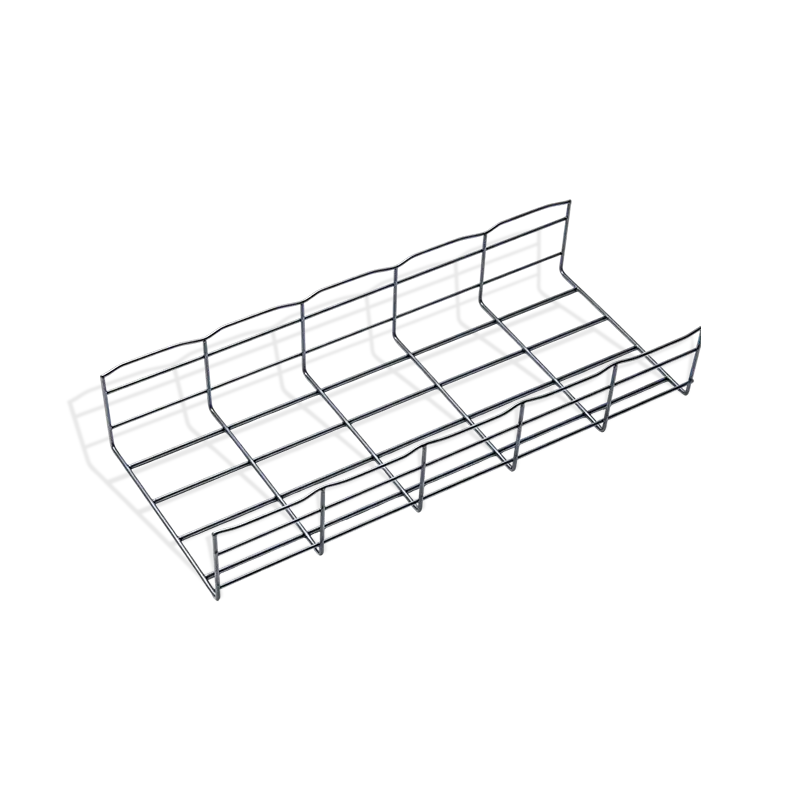
Recommended NEWS:
Aluminum Alloy Cable Tray Installation Guide: Step-by-Step Process
Cable Tray Installation Tips: Steps to Ensure Safety and Efficiency
Punched Perforated Cable Tray vs. Other Cable Management: Core Advantages in Load Capacity, Heat Dissipation, and Installation Efficiency
Which Material for a Marine Cable Tray Offers the Best Resistance to Saltwater Corrosion According to DNV Standards?
Evaluating Load Capacity and Safety Factors of Trough Cable Tray Systems
Recommended LINS:

Youming Group is a manufacturing group company mainly engaged in the research and development of new high-strength cable tray
Product
- Wire Type Cable Tray Series
- Punched Type Cable Tray Series
- Trough Type Cable Tray Series
- Cable Rack Ladder Series
- Ladder Type Cable Tray Series
- Marine Cable Ladder Tray
- Strut Channel Cable Tray Series
- Accessories
- Fiber Cable Tray/Optic Cable Tray
- Photovoltaic Stents
- Stainless Steel Cable Tray Series
- Aluminum Alloy Cable Tray System
Contact information
-
No.36, Taidong Industrial Zone Shiyan Town, Dongtai City, Jiangsu Province
