


 Language
 English
 русский
 Español
 Português
 Deutsch
 عربى
عربى italiano
 Türk
Türk हिंदी
हिंदी Indonesia
 Tiếng Việt
If you need any help, please feel free to contact us

How Cable Tray Manufacturers Ensure Product Quality: A Complete Buying Guide
Content
A 300-meter cable tray run inside a coastal processing plant began showing rust bleed around the rivets after fourteen months. The specification called for 70 microns of hot-dip zinc; laboratory measurements averaged 48. The distributor blamed the galvanizer, the galvanizer blamed the steel surface, and the contractor absorbed the replacement cost.
Cable tray quality is not a single test at the end of the production line. It is a chain of decisions: which coil grade enters the plant, how the forming dies hold tolerance, what the coating line actually deposits, and whether the finished lot can be traced back to raw-material certificates. A working definition used by certification engineers is: cable tray quality is the measurable consistency of material grade, dimensional tolerance, coating performance, and traceability across every length in a production batch. This guide explains how cable tray manufacturers such as Jiangsu Youming Group Co., Ltd. enforce that chain, and what a buyer should verify during supplier qualification.
Material Selection and Incoming Verification
What an Incoming Inspection Should Cover
- Coil thickness held to approximately 0.05 mm against the drawing tolerance.
- Zinc coating weight verified against the mill certificate before slitting.
- Stainless grades confirmed by spectrometer when marine or food-processing trays are specified.
- Edge cracks, scale, and rolling oil flagged before the coil enters the forming line.
Corrosion life is governed by material chemistry and coating thickness, not by sheet thickness alone.
The same logic applies to accessories. Clamps, splice plates, and covers made from a second-grade coil can corrode faster than the tray itself and force an entire run to be replaced. For chloride-rich or washdown environments, a dedicated stainless steel cable tray series with verified 304 or 316L coils is the safest starting point.
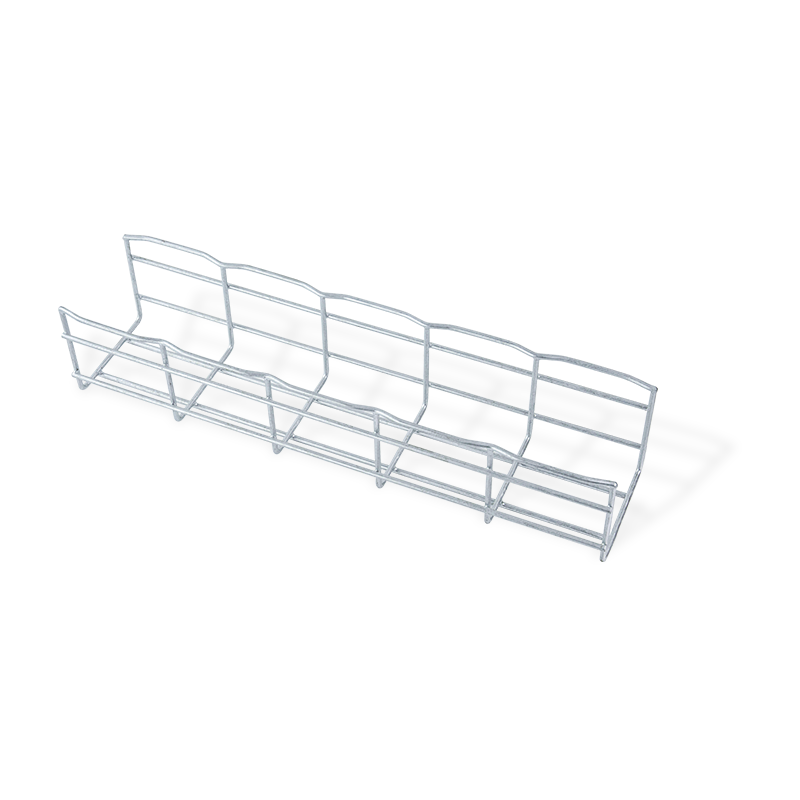 Custom Anti slip Stainless Steel Cable Tray Series ManufacturersJiangsu Youming Group Co., Ltd. is China Custom Anti slip Stainless Steel Cable Tray Series Manufacturers, Company, We Offer OEM/ODM Anti...View Product →
Precision Manufacturing and Dimensional Control
Dimensional consistency over a kilometer-scale tray run is a function of tooling and line automation, not operator skill. Continuous production lines keep flange width, side height, and hole patterns within tight tolerances, so couplers, covers, and splice plates align across batches and across delivery dates.
30,000+tons of annual cable tray capacity
26,000 sq mof production workshop space
6automated line groups from slitting to spraying
Jiangsu Youming Group operates slitting, roll forming, welding, riveting, laser cutting, CNC turret punching, and automatic spray coating lines inside more than 26,000 square meters of workshop space, supporting an annual cable tray output above 30,000 tons. Welding parameters for ladder rungs and riveting pressure for trough assemblies are fixed in the production program rather than left to operator judgment. That is the practical difference between an engineered tray and a fabricated sheet-metal job, and it is documented in the manufacturing facility overview.
A tray run that looks straight at eye level can still fail at splice points if flange width drifts by more than 2 mm from one length to the next.
Coating Systems and Corrosion Protection
Coating thickness and adhesion, not steel thickness alone, determine how many years a cable tray survives in a corrosive environment. Buyers frequently compare price per meter and ignore the coating specification. In an outdoor or industrial atmosphere, a hot-dip galvanized tray with 65 to 85 microns of zinc will outlast a pre-galvanized tray with 15 to 25 microns by a wide margin.
| Coating system | Typical thickness | Best-use environment | Salt-spray resistance |
| Hot-dip galvanized | 65-85 microns | Outdoor, industrial, marine splash | 720 hours |
| Pre-galvanized coil | 15-25 microns | Dry indoor installations | 200-250 hours |
| Spray plastic / powder | 80-150 microns | Washdown, chemical exposure | 500 hours |
| Stainless steel 304/316L | Passive film | Marine, food, pharmaceutical | 1,500+ hours |
A 20-micron coating difference that saves three percent on the purchase price can cut service life in half.
Coil coating also stops at cut edges and punched holes. Hot-dip galvanizing, by contrast, coats the entire fabricated surface, which is why marine and outdoor specifications usually mandate it. For outdoor plant expansions, the hot-dip galvanized cable tray system is the reference choice. Where dust and dripping process fluids are the main threats, the through-type cable tray series keeps cables enclosed while the same coating quality applies to trough walls and covers.
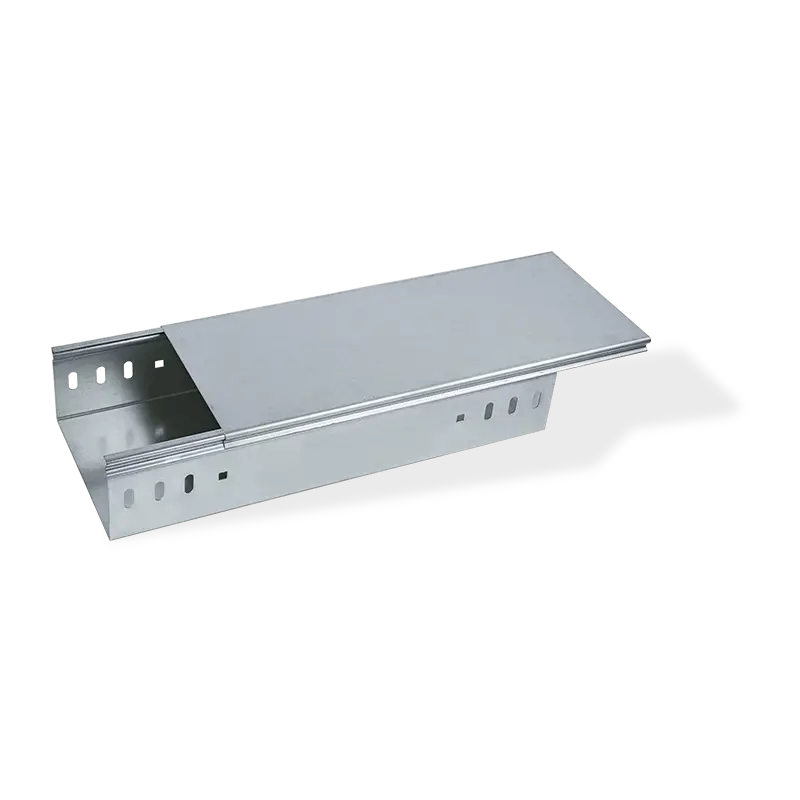 Custom Trough Type Anti slip Cable Tray Series ManufacturersJiangsu Youming Group Co., Ltd. is China Custom Trough Type Anti slip Cable Tray Series Manufacturers, Company, We Offer OEM/ODM Trough T...View Product →Custom Anti Corrosion Hot-Dip Galvanized Cable Tray SystemJiangsu Youming Group Co., Ltd. is China Custom Anti Corrosion Hot-Dip Galvanized Cable Tray System Manufacturers, Company, We Offer OEM/...View Product →
Testing Protocols and Certification
Load deflection, coating adhesion, and salt-spray performance are the three tests that separate a certified tray manufacturer from a sheet-metal shop. The two international performance frameworks are NEMA VE 1 in North America and IEC 61537 in Europe and Asia. Both specify load tests at defined support spans, with a typical acceptance criterion keeping deflection below one one-hundredth of the span. Salt-spray testing under ASTM B117 records the hours to red rust, and a cross-cut adhesion test confirms the coating is bonded to the substrate rather than merely applied.
Stainless steel 3161,500 h
Hot-dip galvanized720 h
Spray plastic500 h
Pre-galvanized250 h
Salt-spray resistance measured as hours to red rust under ASTM B117 conditions. Bar widths are relative to 316 stainless steel.
What a Test Report Should Include
- The load class and support span used in the deflection test.
- The coating type, nominal thickness, and measured thickness range.
- Salt-spray hours and the standard followed.
- The material certificate and batch number for the tested lot.
A quality certificate is only as good as the batch it refers to. Ask for test reports that carry the delivered lot number.
Before approving a new supplier, a project engineer should review the manufacturer's certification records and confirm the scope covers the actual products being purchased, not just a generic factory audit.
Traceability, Packaging, and Delivery
Traceability turns a single test result into a quality system: every coil, batch, and coating run must be linkable to a shipped order. Serious manufacturers stamp batch numbers on every bundle and archive mill certificates against each production order. If a tray fails during commissioning, the manufacturer can pull the original material certificate and coating parameters within minutes.
Packaging as a Quality Step
- Interleaving paper between tray layers prevents surface scratching during stacking.
- Polyethylene wrap and corner protection shield coated edges on export routes.
- Steel-strapped wooden pallets keep long lengths stable and reduce transit vibration damage.
The most common transit complaint is not corrosion; it is scratched coating from loose stacking. Packaging discipline is a quality attribute.
Delivery reliability matters just as much as laboratory data. A manufacturer that schedules production against confirmed coil stock can hold short lead times without switching grades. The material database and process parameters behind these controls are maintained by the in-house technology team, which also supports installation troubleshooting during commissioning.
Frequently Asked Questions
The answers below can be added to a supplier quality questionnaire verbatim.
What tests should a buyer request from a cable tray manufacturer?
Request a load-deflection test report for the exact span and load class, a salt-spray report for the specified coating system, coating thickness measurements, and a material certificate for the steel grade.
How can you verify galvanizing quality on delivered cable trays?
Use a magnetic thickness gauge on at least five points per length, inspect cut edges and rivet holes for bare steel, and compare measured values against the minimums in ISO 1461 or ASTM A123.
What is the difference between pre-galvanized and hot-dip galvanized cable trays?
Pre-galvanized coil carries a thin zinc layer applied before forming, typically 15 to 25 microns. Hot-dip galvanizing immerses the finished tray in molten zinc, producing 65 to 85 microns and covering cut edges. The hot-dip system costs more and lasts substantially longer outdoors.
Why does stainless steel grade matter for marine cable trays?
Grade 304 resists general corrosion, but pitting can occur in chloride-rich salt spray. Grade 316L adds molybdenum, which stabilizes the passive layer and extends service life on offshore vessels and drilling platforms.
Related Products
Recommended NEWS:
How to Choose Correctly? A Comparison and Selection Guide for Ladder Type vs. Trough Type Cable Trays
How to Prevent Cables from Slipping in Tilted or Vibrating Environments? Anti-slip Cable Tray Selection Guide
How to Choose Photovoltaic Brackets: A Complete Guide
Aluminum Alloy Cable Tray Installation Guide: Step-by-Step Process
How to Choose the Right Aluminum Alloy Cable Tray for Your Electrical Systems
Recommended LINS:

Youming Group is a manufacturing group company mainly engaged in the research and development of new high-strength cable tray
Product
- Wire Type Cable Tray Series
- Punched Type Cable Tray Series
- Trough Type Cable Tray Series
- Cable Rack Ladder Series
- Ladder Type Cable Tray Series
- Marine Cable Ladder Tray
- Strut Channel Cable Tray Series
- Accessories
- Fiber Cable Tray/Optic Cable Tray
- Photovoltaic Stents
- Stainless Steel Cable Tray Series
- Aluminum Alloy Cable Tray System
Contact information
-
No.36, Taidong Industrial Zone Shiyan Town, Dongtai City, Jiangsu Province
