


 Language
 English
 русский
 Español
 Português
 Deutsch
 عربى
عربى italiano
 Türk
Türk हिंदी
हिंदी Indonesia
 Tiếng Việt
If you need any help, please feel free to contact us

Where Are Aluminum Cable Trays Used in Electrical and Industrial Applications?
Content
- 1 01What Are Aluminum Cable Trays and How Do They Work
- 2 02Where Aluminum Cable Trays Are Used
- 3 03Common Types of Aluminum Cable Trays
- 4 04How Aluminum Cable Trays Are Manufactured
- 5 05Factors to Consider When Choosing Aluminum Cable Trays
- 6 06Aluminum Cable Trays Compared with Other Systems
- 7 07Customization Options
- 8 08Where Cable Tray Systems Are Headed Next
- 9 09Conclusion
Electrical Cable Management
Electrical contractors and industrial engineers specify aluminum cable trays wherever a cable support system needs to combine light weight, strong corrosion resistance, and long-term structural reliability without the installed weight penalty of steel. The material choice matters most in exactly the settings where cable runs are longest and access for maintenance is hardest, which is why aluminum trays dominate power generation, data center, and outdoor industrial routing over other cable management formats.
01
Lightweight Structure
Roughly a third the weight of steel tray at equivalent load rating, cutting support structure and installation labor.
02
Corrosion Resistance
A natural oxide layer resists rust in humid, coastal, and chemically exposed environments without added coating.
03
Strength-to-Weight Ratio
Structural aluminum alloys hold rated cable loads across long support spans while keeping overall tray mass low.
04
Heat Dissipation
Aluminum's thermal conductivity helps cables shed heat faster than enclosed conduit or trunking systems allow.
05
Low Maintenance
No repainting or corrosion treatment is needed across the tray's service life once installed.
01What Are Aluminum Cable Trays and How Do They Work
An aluminum cable tray is a rigid, open or perforated support structure that carries and organizes electrical cables along a fixed route, mounted on brackets, hangers, or support arms rather than buried or enclosed in conduit. The tray forms a continuous mechanical path for cables from origin to termination, allowing new cables to be added, rerouted, or pulled for maintenance without breaking into walls or ceilings.
Structure and Components
A complete tray system includes the tray sections themselves, splice plates that join sections into a continuous run, support brackets or trapeze hangers that carry the load back to the building structure, and fittings such as elbows, tees, and reducers that route the tray around obstacles and between different tray widths.
Aluminum vs Other Cable Management Systems
Conduit fully encloses cable and protects it from physical damage but makes adding or removing cables far more labor-intensive than an open tray system. Steel cable tray matches aluminum's structural role but weighs considerably more and needs galvanizing or painting to resist corrosion, adding both cost and a maintenance requirement that aluminum tray does not carry.
02Where Aluminum Cable Trays Are Used
4.1
Commercial Buildings
Office and retail construction routes power and data cabling through exposed tray above suspended ceilings.
4.2
Industrial Manufacturing Plants
Factory floors use tray systems to organize control, power, and instrumentation cabling across production lines.
4.3
Power Generation and Distribution
Substations and generation facilities rely on tray systems rated for high cable density and outdoor exposure.
4.4
Data Centers and Communication Facilities
Structured cabling for servers and network equipment runs through ventilated tray for airflow and easy access.
4.5
Oil, Gas, and Petrochemical Facilities
Corrosion resistance makes aluminum tray a standard choice for refinery and offshore cable routing.
4.6
Renewable Energy Projects
Solar farms and wind installations use tray systems to route cabling across large, weather-exposed sites.
4.7
Transportation Infrastructure
Railway, airport, and tunnel projects use tray systems rated for vibration and long-term outdoor exposure.
03Common Types of Aluminum Cable Trays
Ladder
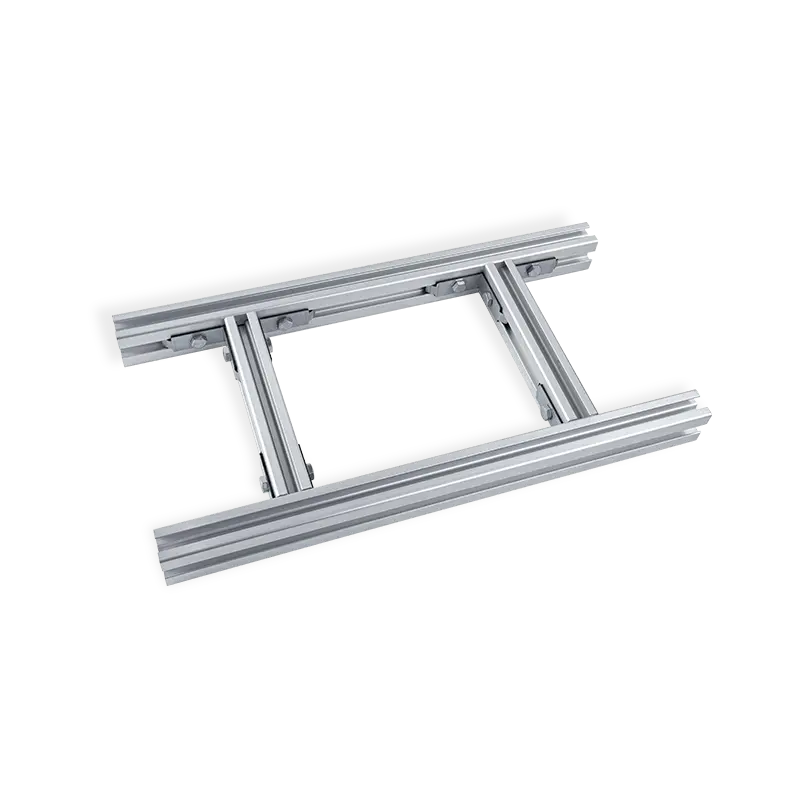
Rung-style bottom for heavy power cable runs needing maximum airflow and easy cable access.
Perforated
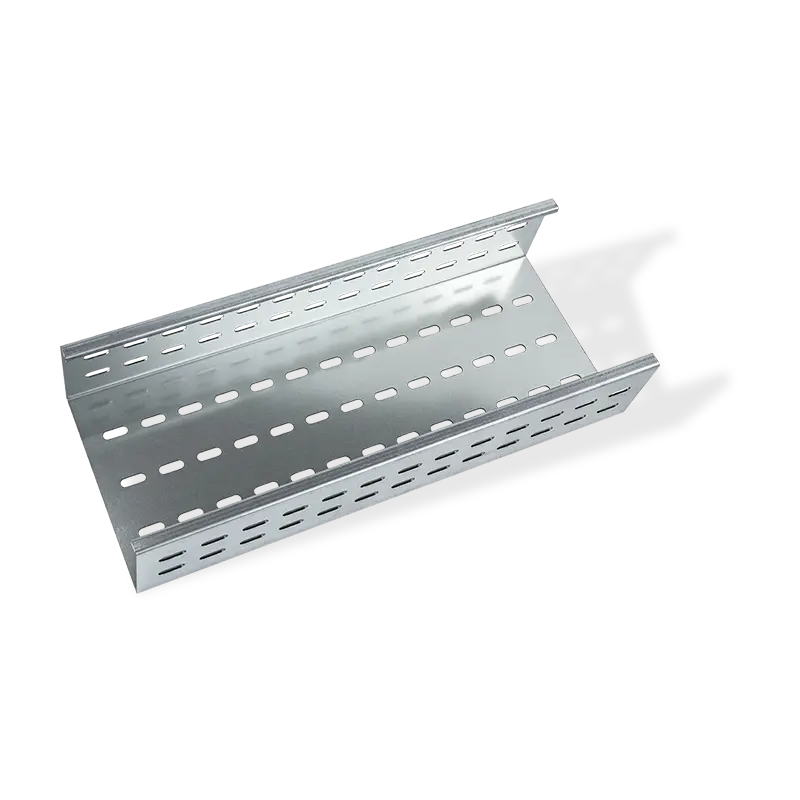
Solid base with ventilation holes, balancing cable support with airflow for moderate cable loads.
Solid Bottom
Fully enclosed base for sensitive cabling needing added physical or dust protection.
Wire Mesh
Lightweight basket-style construction suited to low-voltage and data cable routing.
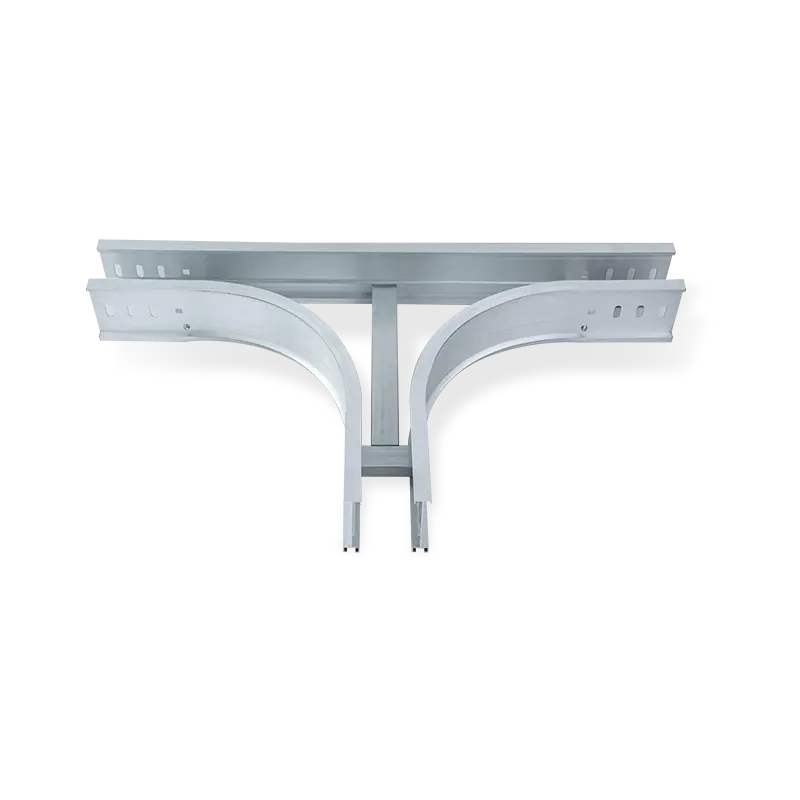
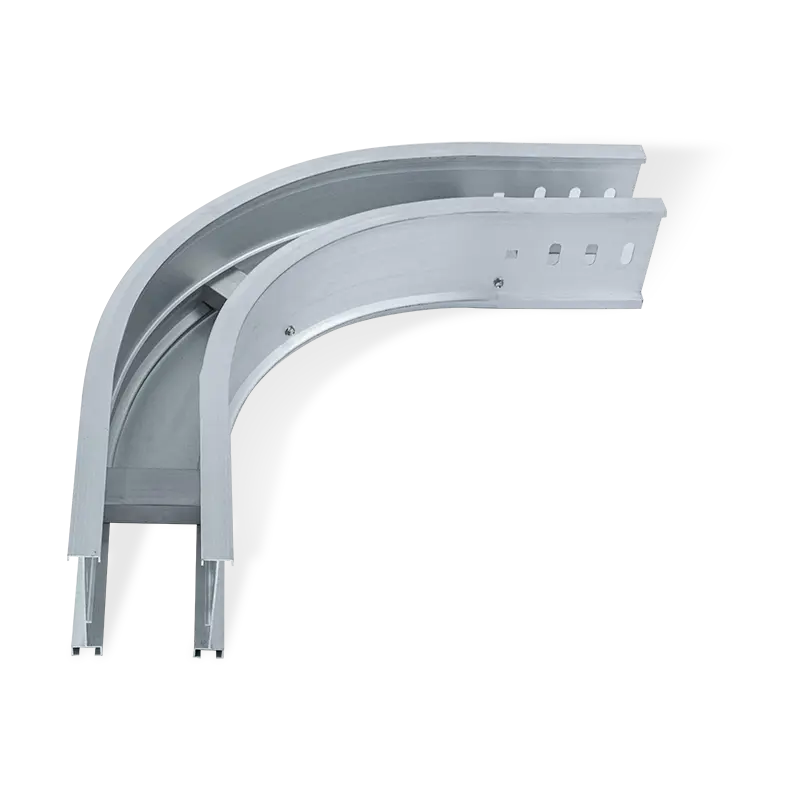
Accessories including splice plates, elbows, tees, reducers, and covers complete a tray system, letting a single tray width and depth adapt to the routing and protection needs of a full installation.
04How Aluminum Cable Trays Are Manufactured
1
Aluminum alloy selection
2
Cutting, punching, forming
3
Surface finishing
4
Inspection and load testing
Alloy grade is selected first for the mechanical and corrosion performance the project requires, then sheet or extruded stock is cut, punched for perforation or ventilation patterns, and formed into the tray's side rail and bottom profile. Anodizing or other surface treatment is applied where additional corrosion protection is specified, and finished trays are load-tested to confirm they meet the rated span and capacity before shipment.
05Factors to Consider When Choosing Aluminum Cable Trays
- Cable load capacity — tray width, depth, and support spacing must match the total weight of cables it will carry.
- Installation environment — outdoor, corrosive, or high-humidity sites call for higher-grade alloys or added surface treatment.
- Ventilation and heat dissipation — high cable density runs benefit from perforated or ladder-style trays over solid bottom designs.
- Tray dimensions and cable expansion — sizing should leave room for future cable additions without exceeding fill limits.
- Compliance with industry standards — tray rating and construction should meet the electrical codes governing the installation.
06Aluminum Cable Trays Compared with Other Systems
AluminumGalvanized SteelStainless SteelPVC Trunking
Weight
Corrosion Resistance
Structural Strength
Cost Efficiency
Galvanized steel remains competitive on raw structural strength and upfront cost, stainless steel leads on corrosion resistance in the harshest chemical environments, and PVC trunking is lightest but limited in load capacity, leaving aluminum as the most balanced option across weight, corrosion resistance, and structural performance for the widest range of installations.
07Customization Options
Tray width, depth, alloy grade, surface treatment, and load rating can all be specified independently, allowing a single tray program to serve everything from lightweight data cabling to heavy industrial power runs. Custom fittings and support accessories are commonly matched to a project's specific routing layout rather than relying on standard configurations alone.
08Where Cable Tray Systems Are Headed Next
Lightweight cable support demand continues to grow as building and industrial projects push to reduce structural load and installation labor, favoring aluminum over heavier legacy systems. Renewable energy infrastructure expansion is adding significant new cable routing volume across solar and wind sites, while data center growth is driving demand for higher-density, better-ventilated tray configurations. Surface treatment development is also pushing corrosion resistance further for the most demanding coastal and industrial environments.
09Conclusion
Reliable cable management in demanding electrical and industrial settings depends on choosing a tray system built for the specific load, environment, and maintenance conditions it will face, which is exactly where aluminum cable trays consistently outperform heavier or less corrosion-resistant alternatives. With ladder, perforated, solid bottom, and wire mesh configurations available across a wide range of alloy grades and finishes, aluminum tray systems give electrical installations a long-service, low-maintenance cable routing solution suited to everything from commercial buildings to offshore petrochemical facilities.
Related Products

Recommended NEWS:
What Are the Key Advantages of Using Galvanized Perforated Cable Trays in Electrical Installations?
What Are the Key Benefits of Using Aluminium Cable Ladders in Industrial Installations?
Ultimate Guide to Aluminum Ladder Trays: Types, Benefits, and Installation
How to Choose the Right Aluminum Alloy Cable Tray for Your Electrical Systems
Maintenance Tips for Aluminum Alloy Cable Trays to Extend Their Lifespan
Recommended LINS:

Youming Group is a manufacturing group company mainly engaged in the research and development of new high-strength cable tray
Product
- Wire Type Cable Tray Series
- Punched Type Cable Tray Series
- Trough Type Cable Tray Series
- Cable Rack Ladder Series
- Ladder Type Cable Tray Series
- Marine Cable Ladder Tray
- Strut Channel Cable Tray Series
- Accessories
- Fiber Cable Tray/Optic Cable Tray
- Photovoltaic Stents
- Stainless Steel Cable Tray Series
- Aluminum Alloy Cable Tray System
Contact information
-
No.36, Taidong Industrial Zone Shiyan Town, Dongtai City, Jiangsu Province
